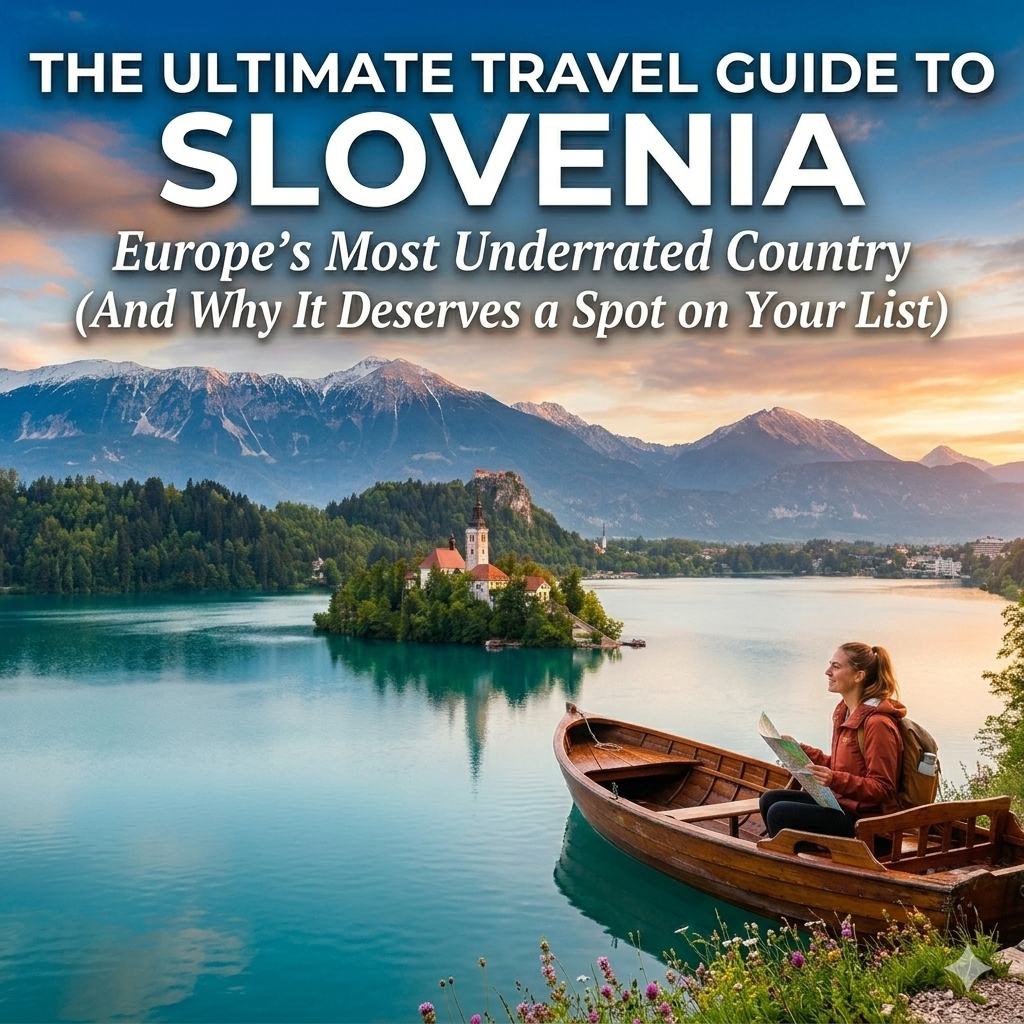
If you’ve already “done” Italy, Austria, or Croatia, Slovenia is what you didn’t realise you were missing.
Tucked between the Alps and the Adriatic Sea, Slovenia quietly combines:
- Alpine lakes
- Mediterranean coastline
- Underground cave systems
- Wine regions
- Fairy-tale towns
all within a country you can drive across in under 4 hours.
Yet most travellers either skip it or spend just one rushed night at Lake Bled.
This guide shows you how to explore Slovenia properly, with practical insights most blogs skip.
Why Slovenia Is Different From the Rest of Europe
Unlike larger European countries, Slovenia is compact and logistically simple. You don’t need internal flights. You don’t need complicated rail planning.
You can:
- Swim in the Adriatic in the morning
- Hike in the Alps by afternoon
- Drink wine in a vineyard by evening
Few European destinations offer that diversity without exhaustion.
When Is the Best Time to Visit Slovenia?
May–June and September are the sweet spots.
Summer (July–August):
- Warm and beautiful
- But Lake Bled gets crowded
- Accommodation prices rise 30–50%
Winter:
- Ideal for skiing in the Julian Alps
- Quiet cities
- Magical Christmas markets in Ljubljana
Spring and early autumn offer:
- Clear hiking conditions
- Fewer tour buses
- Better photography light
- Lower hotel rates
Ljubljana: Europe’s Greenest Capital (And Why It Works So Well)
Ljubljana doesn’t feel like a capital city. It feels like a relaxed university town wrapped around a river.
What makes it special:
- Car-free historic centre
- Castle views from almost everywhere
- Compact walking distances
- Outdoor café culture
Climb to Ljubljana Castle at sunset, not midday. The golden light over red rooftops is far better for photos.
Food tip: Try štruklji (rolled dumplings) and locally produced orange wines from nearby wine regions.
You only need 1–2 days here, and that’s a good thing.
Lake Bled: How to Avoid the Tourist Trap Feeling
Yes, Lake Bled is beautiful. But most visitors experience it wrong.
Avoid:
- Midday summer visits
- Only seeing the church island from shore
Instead:
- Arrive before 8am
- Rent a rowboat instead of taking group boats
- Hike up to Ojstrica viewpoint (short but steep)
Pro insight: Stay overnight in nearby Bohinj instead. It’s quieter and more authentic.
Lake Bohinj: The Better Alpine Experience
Just 30 minutes from Bled, Lake Bohinj sits inside Triglav National Park.
Here you get:
- Fewer crowds
- Raw alpine scenery
- Clearer swimming spots
- Better hiking access
If you want Slovenia’s nature without bus-tour energy, this is it.
The Soča Valley: Europe’s Most Underrated Adventure Region
The emerald water of the Soča River looks edited in photos, it isn’t.
Best activities:
- White-water rafting
- Canyoning
- Kayaking
- Scenic alpine drives
Even if you’re not adventurous, just driving through the valley is unforgettable.
Slovenia’s Adriatic Coast (Yes, It Has One)
Most people don’t realise Slovenia has coastline.
The town of Piran feels Venetian, because it once was under Venetian rule.
Expect:
- Narrow alleys
- Seafood restaurants
- Sunset views over the Adriatic
- Italian influence in food and architecture
Stay overnight. Day-trippers leave by evening, and the town becomes peaceful.
Caves Bigger Than You Expect
Slovenia is one of Europe’s most cave-rich countries.
Visit:
- Postojna Cave
- Škocjan Caves
Škocjan is more dramatic. Postojna is more accessible.
If you can only choose one, pick Škocjan for scale and atmosphere.
Food in Slovenia: It’s Better Than You Think
Slovenian cuisine blends:
- Italian (coastal)
- Austrian (Alpine)
- Balkan (southern)
- Hungarian (eastern)
Expect:
- Farm-to-table quality
- Excellent local wines
- Lower prices than Italy
Dinner at a good restaurant: €15–€25
Local wine bottle in shop: €5–€8
High value for quality, good sign for travel budgets.
Is Slovenia Expensive?
Compared to:
- Italy → cheaper
- Austria → cheaper
- Croatia → similar
- Switzerland → far cheaper
Accommodation:
- Budget stays: €25–€50
- Mid-range hotels: €80–€150
- Boutique alpine lodges: €150+
Car rental is highly recommended, public transport exists but limits flexibility in nature regions.
How Many Days Do You Need?
Minimum: 4 days
Ideal: 7–10 days
Perfect 7-day structure:
1–2 days Ljubljana
2 days Alps (Bled/Bohinj)
1–2 days Soča Valley
1 day caves
1–2 days Piran coast
No internal flights needed. No exhaustion.
Is Slovenia Safe?
Extremely safe.
Low crime rate. Clean cities. Good infrastructure.
Emergency number: 112
Just standard travel awareness is enough.
Why Slovenia Is Perfect for Smart Travellers
Slovenia rewards:
- Slow travel
- Scenic drives
- Outdoor lovers
- Couples trips
- Photography enthusiasts
It doesn’t overwhelm. It doesn’t exhaust. It doesn’t overcharge.
And that’s rare in Europe now.
Frequently Asked Questions
Do I need a visa for Slovenia?
It’s part of the Schengen Area. Check based on your nationality.
Is English widely spoken?
Yes, especially among younger generations and in tourism.
Can I visit without renting a car?
Yes, but you’ll miss Bohinj, Soča, and hidden alpine villages.
Is Slovenia good for solo travel?
Very. Safe, compact, easy to navigate.
Is Lake Bled worth it?
Yes, if you time it right.
Final Thoughts
Slovenia is what people imagine Europe used to feel like:
Clean. Compact. Naturally beautiful. Uncrowded (if done smartly).
If you want:
- Alpine beauty without Swiss prices
- Coastline without Amalfi crowds
- Adventure without chaos
Slovenia might be your best next destination.
Leave a Reply