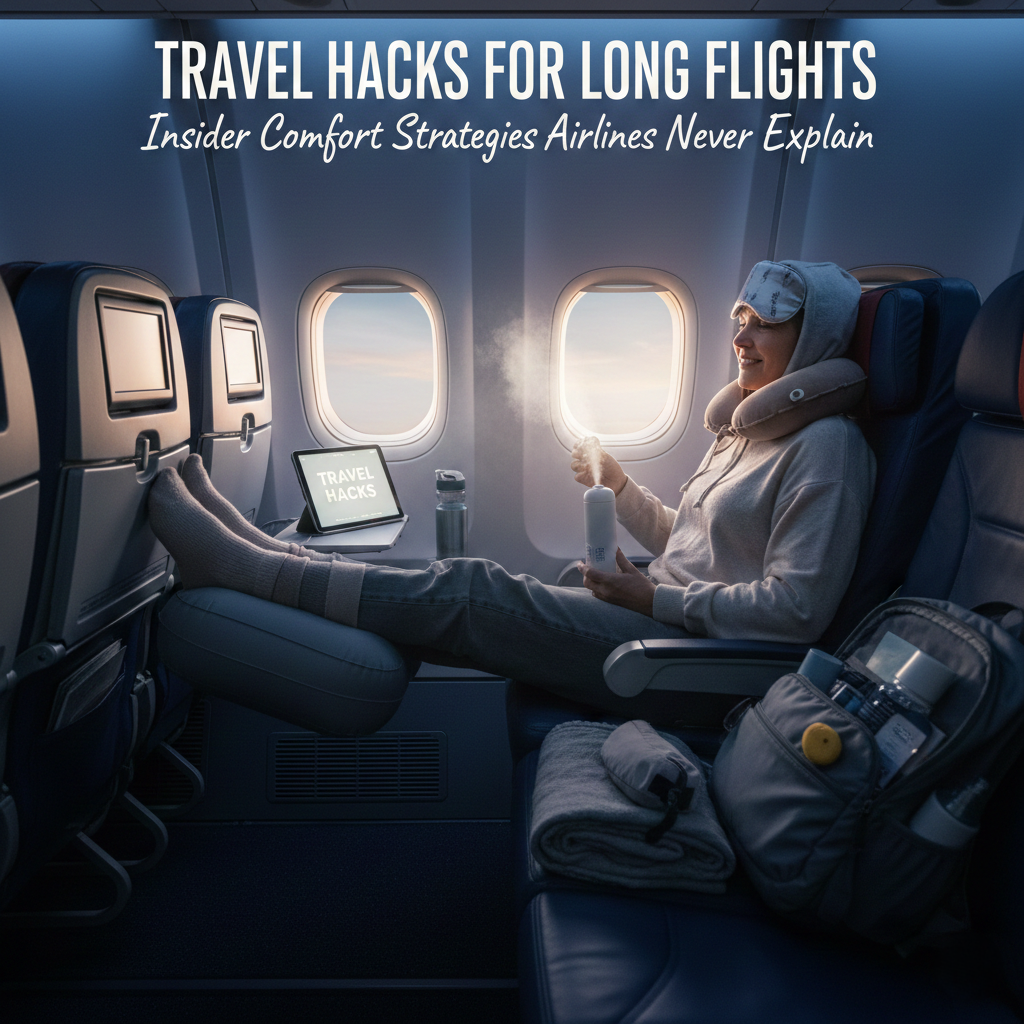
Long-haul flights are often treated as something you simply “endure” before the real journey begins. But after years of flying long distances, I’ve learned something most travel guides miss:
Long flights don’t have to be uncomfortable, they just require smarter decisions, not more spending.
This guide goes beyond obvious tips and dives into how aircraft cabins actually affect your body, how airlines design seating (and how to work around it), and what genuinely improves comfort on flights lasting 8+ hours.
Travel hacks for long flights often go beyond the usual tips, offering insider strategies to enhance comfort that airlines rarely mention. One effective trick is to bring a small, portable under-eye cooler or chilled eye masks to reduce puffiness and refresh tired eyes during the flight. Packing a lightweight, supportive travel pillow designed for neck and head support can make a significant difference in achieving restful sleep, especially when airline pillows are inadequate. Dressing in layers is essential, allowing you to adapt to varying cabin temperatures and stay comfortable throughout the journey. Additionally, investing in noise-canceling headphones or earplugs can create a more peaceful environment, blocking out engine noise and fellow passengers. Hydration is crucial; carrying a reusable water bottle and filling it after passing security helps you stay hydrated better than relying solely on the airline’s limited water service. For eye health, consider using lubricating eye drops to combat dryness caused by low cabin humidity. To combat jet lag, some seasoned travellers suggest adjusting your sleep schedule a few days before departure and incorporating melatonin supplements to help reset your internal clock. Lastly, bringing your own healthy snacks and supplements ensures you maintain energy and avoid the often limited or unhealthy options on board. These insider comfort strategies can make long-haul flights more bearable, so you arrive feeling more refreshed and ready to explore.
Information overload?! Don’t worry, the above information is summarised in a more readable and digestible format below!
How Long Flights Really Affect Your Body
Aircraft cabins are pressurised to the equivalent of 6,000–8,000 feet above sea level. This causes:
- Faster dehydration
- Reduced oxygen saturation
- Swelling in lower limbs
- Disrupted circadian rhythm
Most discomfort isn’t caused by “sitting too long”, it’s caused by dry air + low pressure + immobility combined.
Understanding this helps you plan smarter.
Seat Selection: The Science Behind Choosing the Right One
Aisle vs Window (Beyond Preference)
- Aisle seats allow micro-movement, which improves circulation and reduces swelling.
- Window seats are better for sleep but restrict movement, ideal only if you commit to standing regularly.
What Airlines Don’t Advertise
- Seats behind exit rows often don’t recline
- Bulkhead seats offer legroom but fixed armrests (bad for side sleepers)
- Seats near wings experience less turbulence (important for anxious flyers)
💡 Pro tip: I picked up is to always check independent flight-review platforms for seat
maps before check-in. Airline diagrams can be deceptive, and knowing the real
layout can make a noticeable difference.
.
Carry-On Essentials That Actually Matter (Not the Usual List)
Instead of overpacking, focus on cabin-environment survival:
Must-Have Items
- Electrolyte sachets (airline water alone isn’t enough)
- Saline nasal spray (prevents sinus dryness — rarely mentioned)
- Lip balm with SPF (UV exposure is higher at altitude)
- Soft eye mask with full light seal (not thin fabric ones)
Noise-cancelling headphones aren’t about sound, they reduce sensory fatigue, helping you feel less exhausted after landing.
Clothing Strategy: Dress for Pressure, Not Style
Loose clothing is good, but layering matters more.
Best Practice
- Compression socks (15–20 mmHg, not medical-grade)
- Breathable base layer
- Light hoodie or shawl (cabins fluctuate in temperature)
Avoid tight waistbands, abdominal pressure worsens bloating caused by cabin altitude.
Sleeping on Long Flights: What Actually Works
Forget “sleep hacks”, focus on sleep timing
Instead of trying to sleep immediately:
- Stay awake for the first 60–90 minutes
- Let cabin settle and meal service finish
- Then sleep aligned with destination night time
Melatonin: Use Carefully
Melatonin can help reset rhythm, but timing matters more than dosage.
Always consult official medical guidance (e.g., NHS Travel Health).
👉 UK travel health source:
https://www.nhs.uk/conditions/travel-health/
Movement That Prevents Fatigue
You don’t need yoga in the aisle.
Discreet Circulation Boosters
- Heel-to-toe foot pumps every 30 minutes
- Shoulder blade squeezes while seated
- Standing during bathroom queues (counts as movement)
These reduce venous pooling, the real risk factor behind DVT.
Jet Lag: The Rule Most People Get Wrong
Most advice says “sleep on arrival.” That often backfires.
Better Approach
- Stay awake until local evening
- Get sunlight exposure within first 3 hours
- Eat local-time meals even if not hungry
Light exposure resets your body clock faster than sleep does.
Hygiene & Freshness: Small Details, Big Impact
Cabin air humidity averages 10–20%, lower than most deserts.
What Helps
- Gentle face mist (alcohol-free)
- Moisturiser applied before boarding
- Hand wipes for tray tables (highest germ concentration)
These aren’t about cleanliness, they reduce inflammation and fatigue.
Food & Drink: What to Eat (and Avoid)
The best in-flight meals are high in protein and light carbs—think grilled chicken with
vegetables or a simple fruit salad. Avoid alcohol, which accelerates dehydration, and
limit caffeine after the first half of the flight to prevent further dehydration and
jitteriness. Drinking water steadily throughout the journey keeps you hydrated and
helps prevent the dreaded “travel fog.”
After Landing: Recover Faster Than Most Travelers
Within the first 6 hours:
- Walk outside
- Stretch hips and calves
- Eat something warm
- Shower if possible
These actions reduce “travel hangover”, the foggy feeling many mistake for jet lag.
Common Questions
How early should I arrive for a long-haul flight?
At least 3 hours for international flights, as recommended by airlines and airports.
Is upgrading worth it?
Premium economy often provides the best value-to-comfort ratio, not business class.
How can I reduce anxiety during flights?
Predictability helps, playlists, routines, familiar scents, and understanding turbulence mechanics.
How do I reduce DVT risk?
Hydration, compression socks, regular movement, and avoiding prolonged leg crossing.
👉 Official UK guidance:
https://www.gov.uk/foreign-travel-advice
Final Thoughts
Long flights aren’t just about patience, they’re about strategy.
With the right preparation and an understanding of how flying affects your body, you can arrive not just awake, but genuinely ready to enjoy your destination.
Travel smarter, not harder.
Disclaimer
This article is for informational purposes only and does not replace medical or travel advice. Always consult official government sources or healthcare professionals before travel.