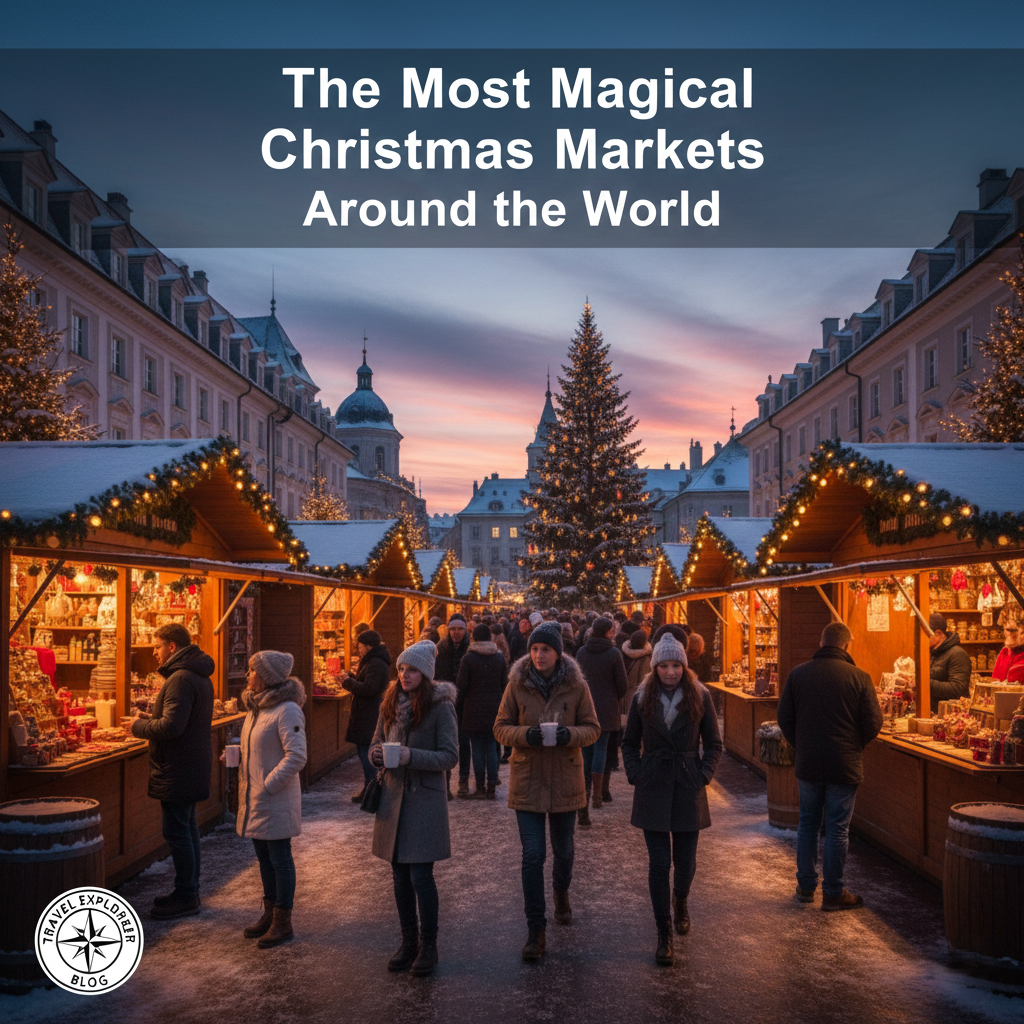
Winter has a special kind of magic, doesn’t it? There’s something about the crisp air, twinkling lights, and the scent of mulled wine that instantly transports us into a fairy-tale world. And one of the most enchanting ways to embrace that magic is by visiting Christmas markets. These festive hubs, which originated in Europe and now brighten cities around the globe, turn historic squares and city centers into bustling winter villages filled with seasonal food, handcrafted gifts, live music, and centuries-old traditions.
I remember my first visit to Nuremberg’s Christkindlesmarkt—an experience that feels like stepping into a storybook. The aroma of roasted sausages, gingerbread, and spiced mulled wine, combined with the glow of fairy lights and the sound of carolers, created a warm, nostalgic atmosphere. Whether you’re traveling as a couple, with family, or even solo, Christmas markets are a safe, walkable, and culturally rich experience that captures the spirit of winter perfectly.
So, if you’re dreaming of a festive escape in 2026, let me guide you through some of the most magical markets worldwide. I’ll share realistic costs, the best times to visit, pros and cons, and official resources to help you plan confidently and enjoy every moment of your seasonal adventure.
Nuremberg, Germany – Christkindlesmarkt
First up, I have a soft spot for Nuremberg’s Christkindlesmarkt. It’s one of the oldest and most famous markets in the world, dating back to the 16th century. When I visited, I wandered through medieval streets lined with wooden stalls, each one offering traditional Bavarian treats and crafts. The atmosphere is truly authentic, with red-and-white cloth canopies and a sense of history in every corner.
What makes it special?
The Nürnberger bratwurst—small, flavorful sausages cooked over open flames—are a must-try. The gingerbread, or Lebkuchen, is rich and fragrant, often decorated with icing and nuts. And just walking around, soaking in the centuries-old traditions, makes you feel part of something timeless.
Typical costs?
Expect to spend around £50–£70 per person daily, which covers food, drinks, and small gifts. The best time to visit is late November to early December, preferably on a weekday when it’s less crowded.
Pros:
It’s a genuinely German experience—authentic food, festive music, and a family-friendly vibe.
Cons:
It gets very busy closer to Christmas, and accommodation prices soar, so plan ahead.
Hidden gems:
If you want a quieter experience, consider Bamberg or Rothenburg ob der Tauber—both look like they jumped straight out of a Christmas card.
Official resources:
German National Tourist Board and Auswärtiges Amt are your go-to for travel info.
Vienna, Austria – Vienna Christmas Markets
Vienna feels like the heart of Christmas elegance. I once visited the Rathausplatz market, surrounded by grand palaces and shimmering lights, and it felt like stepping into a winter fairy tale. The scent of roasted chestnuts and the sound of classical music playing softly in the background set the perfect scene.
What makes it special?
Ice skating trails weave through the market, and the backdrop of Vienna’s historic architecture adds a regal touch. Listening to carolers singing inside ornate halls or enjoying a concert nearby makes it a truly refined experience.
What’s the budget?
On average, plan for £60–£80 per day, which includes food, drinks, and souvenirs. The best visiting window is mid-November to mid-December for a perfect balance of festive atmosphere and manageable crowds.
Pros:
The city’s beauty and multiple markets mean you can explore without feeling overwhelmed.
Cons:
Weekends can get crowded, so try visiting on weekdays.
Hidden gems:
Don’t miss the charming Spittelberg Market or the Palace Market at Schönbrunn—both offer unique local crafts and less touristy vibes.
Official resources:
Austrian Tourism and Oesterreich.gv.at will help you plan smoothly.
Strasbourg, France – Marché de Noël
If there’s a true “Capital of Christmas,” it’s Strasbourg. I remember walking through its half-timbered medieval houses, decorated with lights, and feeling like I’d entered a real-life fairy tale. The entire city transforms into an open-air museum of holiday cheer.
What makes it special?
The city’s historic center is full of cozy alleyways and squares filled with stalls selling Alsatian food, mulled wine, and handcrafted ornaments. The scent of spiced sausages and baked goods drifts everywhere, and the music of traditional carolers fills the air.
Cost estimate?
About £50–£70 per day, mostly spent on delicious local food and souvenirs. The best time to visit is late November to mid-December, when the city is at its most festive.
Pros:
Unmatched atmosphere, rich history, and wonderful food options.
Cons:
It’s very popular with tourists, so it can get crowded.
Hidden alternatives:
Explore Colmar or Obernai for a more relaxed, yet equally enchanting experience.
Official resources:
France Tourism and Diplomatie.gouv.fr can help you with planning.
Bruges, Belgium – Christmas Market & Ice Rink
Bruges, with its medieval streets and canals, feels like a fairy tale during winter. I spent a chilly but delightful day wandering around, skating in the Market Square, and sampling Belgian waffles and chocolates. The atmosphere is cozy and romantic—perfect for couples or anyone wanting a quiet but scenic holiday.
Highlights:
Ice skating in the square, warm cups of hot chocolate, and strolling past beautifully lit historic buildings.
Budget?
Expect to spend £50–£70 daily, mostly on food, souvenirs, and skating rentals. The best time to visit is early December on a weekday to avoid the biggest crowds.
Pros:
Very scenic, romantic, and compact—easy to explore on foot.
Cons:
Smaller market than big cities like Brussels or Antwerp.
Hidden alternatives:
Ghent and Ypres also host charming markets with fewer tourists.
Official resources:
Visit Belgium is your resource for planning.
Luxembourg City – A Calm and Authentic Christmas Experience
If you’re seeking a quieter, more local holiday, Luxembourg’s Christmas markets are a hidden treasure. I once visited the markets in the old town, tucked away among ancient stone buildings, and loved the calm, authentic atmosphere. It’s perfect for a peaceful winter escape.
Cost estimate:
Around £40–£60 daily, with plenty of local food and craft stalls.
Pros:
Less crowded, relaxed vibe, and beautiful historic setting.
Cons:
Smaller selection of stalls—more of a boutique experience.
Official resources:
Visit Luxembourg will help you plan your trip.
Tallinn, Estonia – A Medieval Christmas Fairytale
Tallinn’s Christmas market is one of Europe’s most charming, set inside a UNESCO-listed medieval square. I remember walking through snow-covered cobblestone streets, browsing stalls filled with traditional crafts, and warming up with some mulled wine. It’s authentic, less commercial, and feels like stepping back in time.
What makes it special?
The medieval architecture, local crafts, and cozy cafés make it a winter wonderland.
Budget?
Around £40–£60 per day, mostly spent on food, crafts, and warm drinks. Late November to early January is the ideal visiting period.
Pros:
Fewer crowds, authentic atmosphere, and stunning setting.
Cons:
Cold temperatures—layer up!
Official resources:
Visit Estonia and VM.ee provide all you need to plan.
Sibiu, Romania – An Eastern European Hidden Gem
Sibiu’s Christmas market is a charming, affordable alternative to Western Europe’s more touristy markets. I loved wandering through its medieval streets, sampling hearty local foods, and soaking in the festive atmosphere without the crowds. It’s a great choice for a budget-friendly, authentic experience.
Cost estimate:
£30–£50 daily, especially on local foods and crafts.
Pros:
Excellent value, rich traditions, and fewer tourists.
Cons:
Fewer international flight options—consider adding a city break in nearby Transylvania.
Official resources:
Romania Tourism helps plan your visit.
Practical Tips for Visiting Christmas Markets
Always check official opening dates—some markets operate only in the evenings or have special event days. Visiting on weekdays usually means fewer crowds and a more relaxed experience. Dress warmly, layer up, and wear waterproof footwear—winter weather can be unpredictable. Booking accommodation early is crucial, especially in popular cities like Munich or Vienna. Carry cash, as many small stalls prefer it, and bring a reusable shopping bag for your gifts and souvenirs.
If you’re traveling with family, look for markets with carousels, Santa visits, and craft workshops—they make the experience magical for kids. For couples, evening visits with candlelit stalls and mulled wine create perfect romantic moments. Solo travelers can enjoy guided tours or communal seating areas, which are great for meeting fellow adventurers.
When’s the Best Time to Visit?
Late November tends to be less crowded and offers lower prices, but the full festive atmosphere peaks in the week before Christmas. Early December is ideal for a cozy, authentic experience, while the week leading up to Christmas is the most lively and joyful—if you don’t mind the crowds.
Extra FAQs for Your Festive Journey
Q: How much should I budget per day at Christmas markets?
A: Plan for around £40–£80 per person daily, covering food, drinks, souvenirs, and small gifts. It’s easy to spend more if you indulge in special treats or handcrafted items.
Q: Are Christmas markets safe, especially in busy cities?
A: Yes. Most are well-policed and designed for walkability. Just keep an eye on your belongings, especially in crowded areas.
Q: Can I visit multiple markets in one trip?
A: Absolutely! Many European cities are close enough to make a multi-market itinerary, such as Germany’s Nuremberg, Dresden, and Munich or Austria’s Vienna, Salzburg, and Innsbruck.
Q: What’s the best way to get around between markets?
A: Public transport—trains, trams, and buses—are reliable and efficient. Walking is often the most charming way, especially in compact cities like Bruges or Tallinn.
Q: Should I buy souvenirs at the markets or elsewhere?
A: Markets are perfect for unique, handcrafted gifts. Look for local crafts, ornaments, and regional specialties—these make special keepsakes or thoughtful presents.
Q: What should I do if the weather is very cold or snowy?
A: Dress in layers, wear waterproof shoes, and don’t forget gloves and hats. Take breaks in warm cafés and enjoy hot drinks—some markets even have cozy indoor spaces.
Q: Can I participate in festive activities like caroling or workshops?
A: Many markets offer craft workshops, cooking demos, and singing events. Check the official websites or local event listings before you go.
Final Thoughts
A trip to a Christmas market isn’t just about shopping—it’s about experiencing local traditions, tasting seasonal treats, and feeling the warmth of community in the cold winter months. Whether you choose iconic markets like Nuremberg or Vienna, or quieter hidden gems like Tallinn or Sibiu, careful planning will ensure you enjoy the magic without stress.
With realistic budgets, official resources, and a little bit of preparation, your festive winter escape can become one of your most cherished holiday memories. So pack your warmest coat, bring your sense of wonder, and get ready to embrace the enchanting spirit of Christmas across Europe and beyond. Happy travels!
Content Disclaimer
This article is written for informational purposes based on research, publicly available data, and original structuring. We aim to provide accurate and helpful travel guidance. Images used are royalty-free or belong to their respective owners.