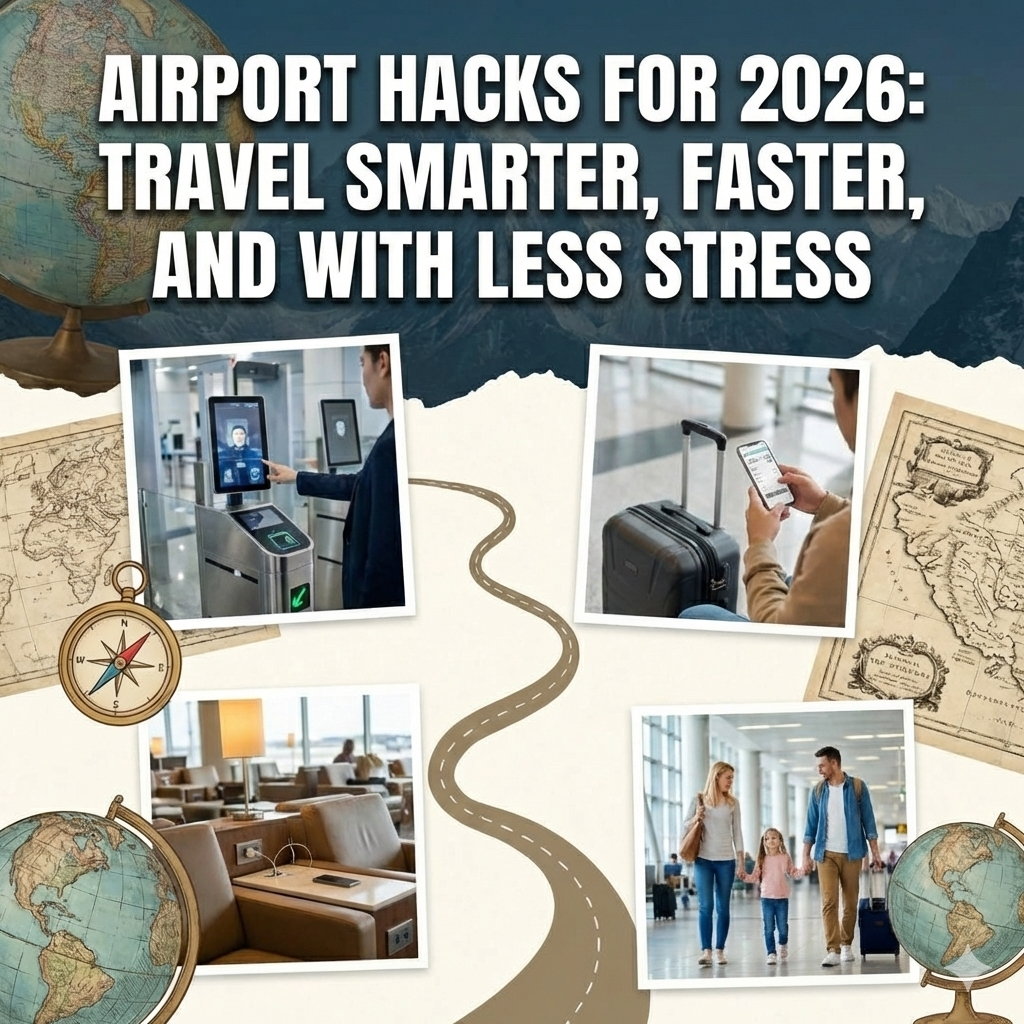
Airports can feel chaotic, especially as global travel continues to grow and security procedures evolve. Long queues, last-minute gate changes, and crowded terminals are common frustrations for travellers. Fortunately, airports in 2026 are becoming smarter, more automated, and increasingly passenger-focused. With the right preparation and a few practical hacks, you can move through airports more efficiently and enjoy a smoother journey.
This guide shares smart airport tips for 2026 and highlights some of the world’s most traveller-friendly airports that are setting new standards for convenience and comfort.
Smart Packing and Faster Check-In
One of the easiest ways to save time at the airport is by packing efficiently. Using organised packing cubes allows you to access essentials quickly without unpacking your entire bag. Keeping electronics, liquids, and documents neatly arranged also helps when passing through security.
Many airports now rely heavily on self-service check-in kiosks. These machines allow passengers to print boarding passes and luggage tags within minutes, often avoiding long airline counters. In 2026, several airports are expanding AI-assisted baggage drop systems, which automatically scan, weigh, and route luggage, reducing wait times even further. Travellers with priority access or airline status should always use designated fast-track counters when available.
Moving Through Security More Efficiently
Security checkpoints are often the biggest source of delays. Enrolling in trusted traveller programmes such as TSA PreCheck, Global Entry, or similar regional schemes can significantly speed up the process. These programmes usually allow passengers to keep shoes, belts, and laptops in place, making screening quicker and less stressful.
It also helps to keep travel documents, electronics, and liquids easily accessible. Some airports now operate express security lanes for travellers carrying minimal items, which are especially useful for business travellers or short trips.
Making the Most of Airport Technology and Lounges
Airport lounges are no longer limited to frequent flyers. In 2026, many airports offer pay-per-use lounges accessible through apps or day passes. These lounges typically provide fast Wi-Fi, charging stations, comfortable seating, refreshments, and quiet workspaces, ideal for long layovers or delayed flights.
Modern airports are also improving navigation through technology. Official airport apps now offer real-time gate updates, security wait times, and interactive maps. Some airports use augmented reality (AR) to help passengers locate gates, restaurants, and services quickly, while virtual assistants within apps can answer common travel questions.
Airports Leading the Way in Innovation
Several international airports stand out for their passenger-friendly design and advanced systems:
Singapore Changi Airport
Widely regarded as one of the world’s best airports, Changi features indoor gardens, relaxation areas, and entertainment zones. Its efficient immigration processes, automated check-in, and clear signage make transiting simple and stress-free.
Hamad International Airport, Qatar
Known for its spacious layout and modern design, Hamad Airport uses advanced baggage handling systems and self-service check-in zones. Quiet areas and well-planned passenger flow help reduce congestion.
Incheon International Airport, South Korea
Incheon focuses on efficiency and sustainability, offering automated immigration clearance, real-time baggage tracking, and eco-friendly transport within the terminal. Its organised layout and services consistently receive high passenger satisfaction ratings.
Heathrow Terminal 5, United Kingdom
Terminal 5 is designed for smoother passenger movement, with biometric boarding, self-service baggage drops, and optional fast-track security lanes that reduce waiting times.
Saving Time on Food, Shopping, and Rest
To avoid queues at busy cafés, many airports now allow mobile food ordering, letting travellers pick up meals when ready. Duty-free shopping has also become easier, with apps that allow passengers to reserve items in advance and collect them quickly.
For rest and relaxation, airports increasingly offer nap pods, quiet rooms, and relaxation zones, often bookable through official apps. These options can make a significant difference during long layovers or overnight travel.
Frequently Asked Questions
How can I reduce waiting time at airport security in 2026?
Joining trusted traveller programmes, arriving early, and using fast-track lanes can help. Airport apps also provide real-time updates on security wait times.
Are biometric passports and facial recognition helpful?
Yes. Many airports now use biometric verification for faster boarding and immigration. Ensuring your passport and travel documents are up to date can save time.
Is lounge access worth paying for?
For long layovers or delays, lounge access can be worthwhile. Lounges provide comfortable seating, refreshments, Wi-Fi, and a quieter environment.
Which airports are easiest to navigate?
Airports such as Singapore Changi, Incheon, and Dubai International are known for clear signage, efficient layouts, and advanced passenger systems.
How can I avoid missing a connecting flight?
Check minimum connection times, monitor gate updates through airport apps, and allow longer layovers when possible. Some airports also offer real-time baggage and flight alerts.
Final Thoughts
Air travel in 2026 is becoming more streamlined thanks to smarter airport design and advanced technology. By packing strategically, using trusted traveller programmes, and taking advantage of airport apps and automation, passengers can significantly reduce stress and save time. Choosing well-designed airports and planning ahead can transform the airport experience from frustrating to manageable and even enjoyable.
Content Disclaimer
This article is written for informational purposes based on research, publicly available data, and original structuring. We aim to provide accurate and helpful travel guidance. Images used are royalty-free or belong to their respective owners.